
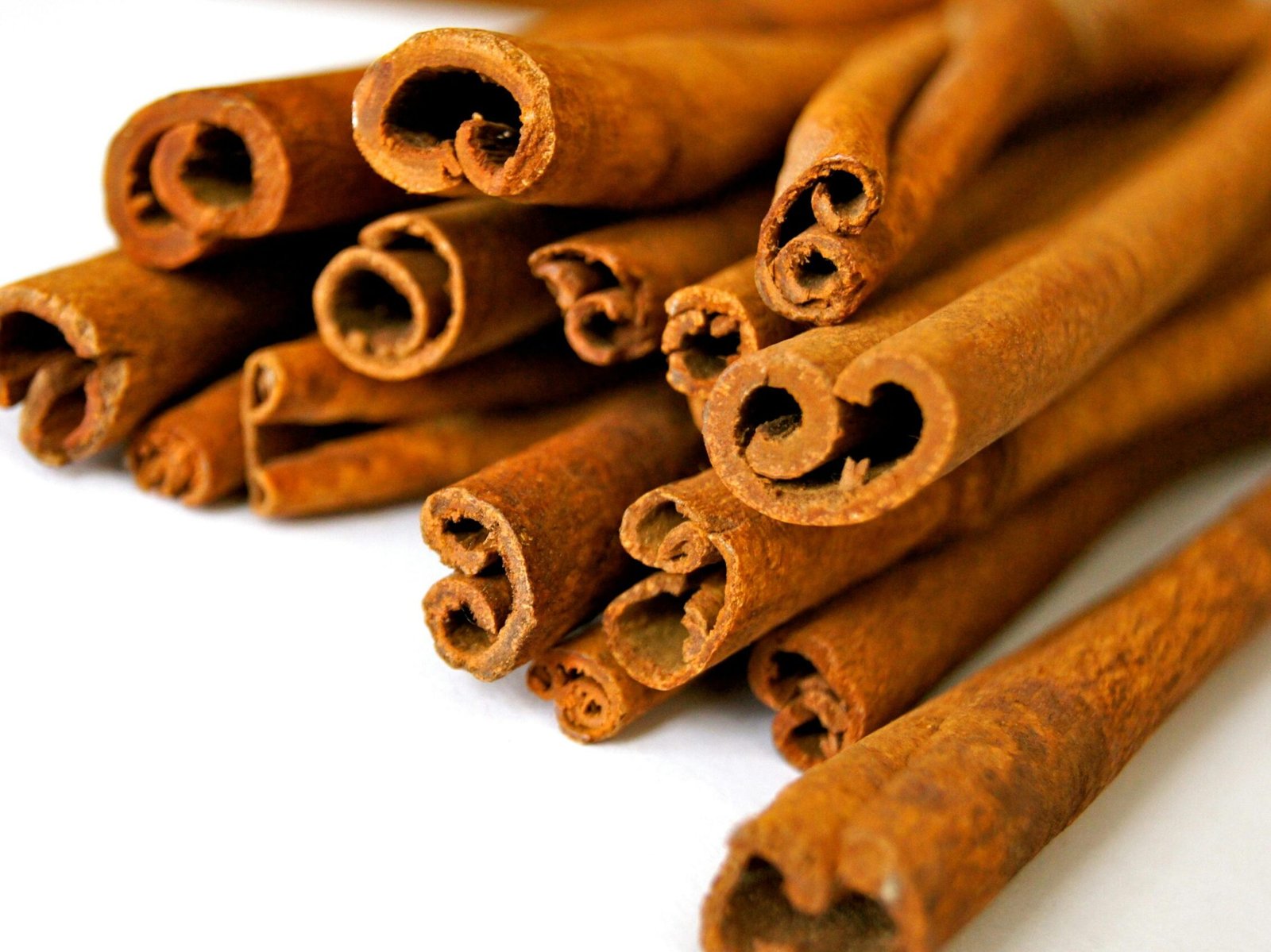
“Among my earlier, fond memories are two regarding this great spice. The first is breakfast with buttered toast topped with crunchy, baked sugar and Cinnamon, melted and melded, right out of the oven. The second recollection – during the sixth grade – was that of soaking toothpicks in Cinnamon Oil and walking around, during recess, with one protruding from the corner of our young mouths, savoring its spicy, hot, citrusy punch, full of ourselves and absolutely certain – at the senior-most grade at Hillside Elementary School – that we were super cool!“
Yet today, the flavor of 100 percent pure Cinnamon brings delightful warmth to sweet dishes, stimulating complexity to savory dishes, and making every dish a reason for celebration – on or off any/all playgrounds!
So, from where does this spice come? Also called Ceylon Cinnamon, that which we enjoy is derived from the bark of a bushy evergreen tree of the Laurel family – No, not of the Laurel and Hardy movies, but rather the Linnaeus classified plant family named Lauraceae.
It was first used by Egyptians as early as 2000 BC as a meat preservative and flavoring agent for food and drinks. Highly prized for its taste and smell, Cinnamon was considered a rare and precious luxury throughout the ancient world. It was used to embalm mummies in ancient Egypt and mentioned in the Old Testament as an ingredient in holy anointing oil.
But, throughout a significant portion of these early times, Arab traders owned the preponderance of the Cinnamon in the world, making it a scarce luxury for those who sought it.
Actually, there are several varieties of Cinnamon with various names and, often from overlapping locales. Among them are Baker’s Cinnamon, Chinese (or, Cassia) Cinnamon, Ceylon Cinnamon, Dutch Cinnamon, Korintje Cinnamon, Indonesian Cinnamon, Makara Cinnamon, Saigon Cinnamon, True Cinnamon, and Vietnamese Cinnamon, with, generally, the name indicating their area of origin. But there is massive overlap, with different culinary and botanical sorts interchanging names as to which is most correctly called what!
So, let’s try to simplify it a bit. Perhaps at the Cinnamon spectrum’s opposing “taste bud” ends are savory Mexican Cinnamon (Cinnamomum verum) and sweet Vietnamese Cinnamon (Cinnamomum loureiroi) – with everything else somewhere in between. (The latter is also called Saigon Cinnamon or Vietnamese Cassia – the former name, not because it grew in or around that city site of the fierce 1968 Tet Offensive fighting, but rather the location from which it was originally traded to the outside world!)
However, we’re going to use Mexican Cinnamon, also recognized in some cooking circles as the above-mentioned Ceylon Cinnamon, also called True or Soft Cinnamon depending on its texture. Widely grown in Mexico and East Africa, Mexican Cinnamon is more herbal, savory, and not super sweet.
It is originally from Sri Lanka and Southern India, and complements Rice and Tomato sauce wonderfully. (In fact – beyond the earlier mentioned Cinnamon toast – as a child I used to love warm rice in a bowl, with fresh farm milk, topped by Cinnamon and sugar for breakfast! To rev it up, all one needs to do is stir in some Raisins, Cranberries, or any other favorite dried fruit, and add a few chopped Almonds or Pistachios.)
How did it come to pick up that Mexican moniker? The tropical climate of the state of Veracruz in Mexico is quite similar to the tree’s original Southeast Asian environs, hence where most is grown in this country. Mexican Cinnamon is tan in color, fragile, soft, crumbly, and very fragrant with delicate notes of Clove. It is the most preferred Cinnamon commonly found in the kitchens of Mexico and Europe.
Cinnamon has been prized for its medicinal properties for thousands of years. It’s rich in antioxidants and other beneficial compounds, with some recent research indicating that it may help manage blood sugars, protect against heart disease, and reduce inflammation.
Given that I’m no longer the youngest of spring pups, let me share this pertinent information with folks around my age. Incorporating Cinnamon into one’s daily consumption routine can help prevent signs of internal and external aging, thanks to its potent effects on inflammatory and oxidative compounds in the body.
Thus, many health-conscious folks drink a cup of Cinnamon tea every day. If drunk in the
morning, it may help boost metabolism. But it’s also great post-meal, as it aids digestion and helps regulate blood sugar levels.
“Cinnamon is the spice that seductively whispers of far-off lands and cozy firesides.”

