
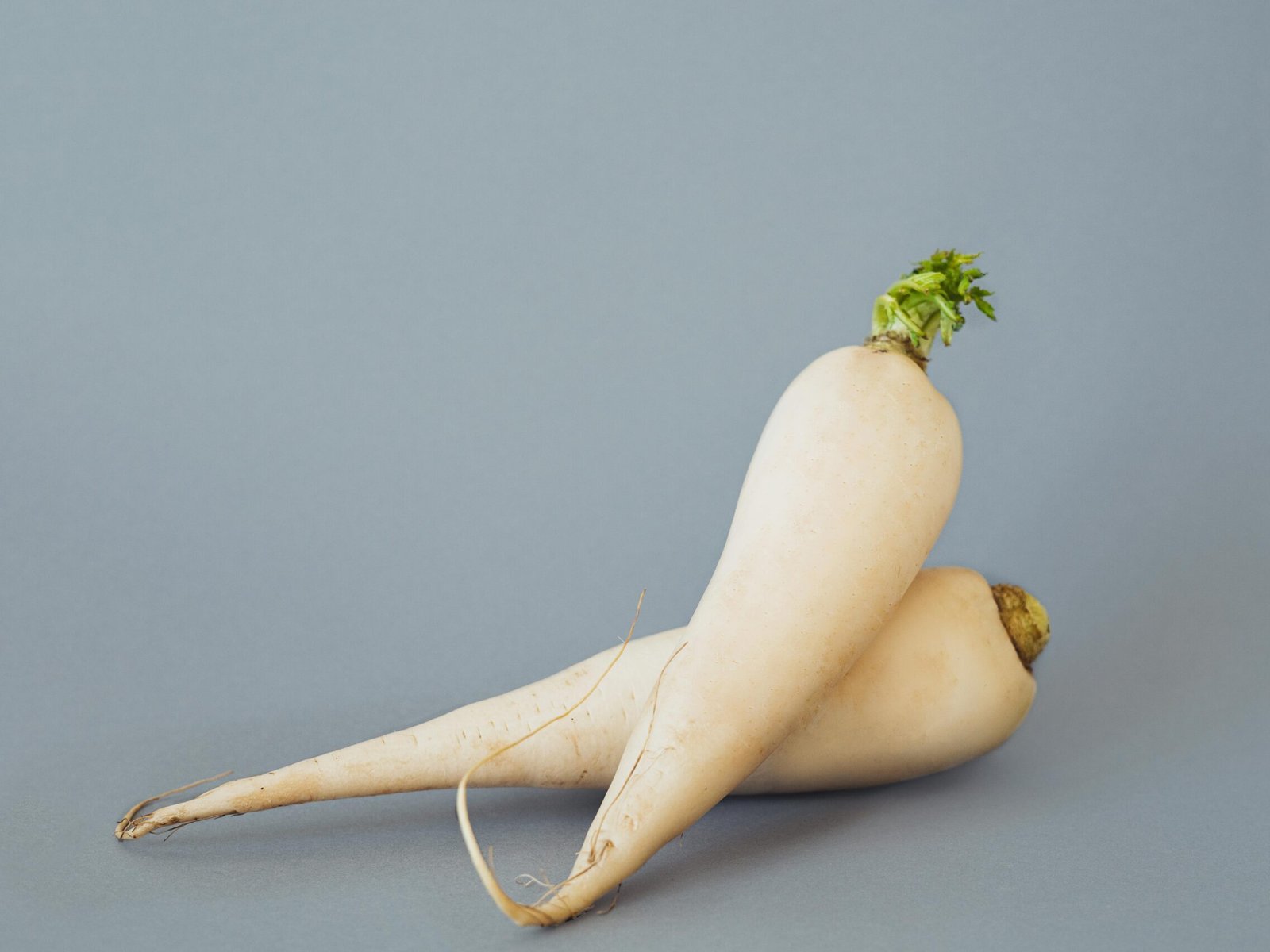
Family: Brassicace
Also known as: Chinese Radish and Japanese Radish
Origin: Mediterranean and Black Sea regions (Yes, both have sub-tropical areas)
Daikons found their way to China around 500 BCE – OK, with a little help from humans! From there, they spread to other parts of Asia, becoming a staple in East Asian cuisine, particularly in Japan, where it was introduced over 1,300 years ago, ultimately acquiring their now-common name.
While there is but one species of Daikon, various cultivars have been created – in fact, more than 100 different types were cultivated in Japan alone. The most extreme possibility being the heirloom Chinese variety, Watermelon Radish, with its green exterior and a vibrant pink interior. Another, the Sakurajima Daikon, coming from Kyushu, Japan, holds the Guinness World Record for the World’s Largest Daikon at around twenty-two pounds!
Water-rich and low in calories, they are a good source of Vitamin C. Furthermore, they contain diastase, an enzyme that aids digestion. In traditional medicine, they have been used for coughs and as a detoxifier. As to that first attribute above – of all the things about which one might possibly worry – AARP warns that eating these natural diuretics too late could cause a nighttime bathroom trip to interrupt one’s sleep!
Nifty Nugget of Knowledge: The Daikon’s root, leaves, and flowers are all edible. In fact, those first two plant parts have traditionally been used to aid digestion and fight infections.
Daikon has also long been used in ethnopharmaceutical medicine for its cooling and anti-inflammatory properties, believed to aid with clearing phlegm, supporting the immune system, and alleviating ailments like coughs, indigestion, and nasal congestion. Furthermore, it has been prepared as a juice for topical application, brewed into tea for internal consumption, or added to meals to promote detoxification, improve respiratory and circulatory health, and consumed to help alleviate hangover symptoms! Lastly, it may purportedly help support brain and nervous system health due to its folate content.
As a foodstuff, Daikons are quite versatile, being eaten raw, pickled, or cooked in dishes like soups and stir-fries. They are mild in flavor, lacking that spicy element of the more conventional, rounder, red with white top Radish. When eaten raw, they are slightly sweet, yet peppery with a crisp, yet watery, texture. When cooked, the flavor mellows becoming sweeter.
So why not be a bit adventurous? Try out the following somewhat unique recipe.
Japanese Daikon Steak
(Side dish)
Serves two
Ingredients:
One-third (1/3) Daikon Radish, medium to large, peeled
One (1) teaspoon, kombu dashi powder or five (5) grams mushroom stock powder (however, the former is a specific Japanese seaweed reported to lower blood cholesterol and suppress blood sugar levels.)
One (1) Tablespoon, sake, optional – but it does remove any lingering bitterness.
One (1) Tablespoon butter
One and one-half (1 ½) teaspoon, Soy sauce
One (1) Tablespoon, Mirin sweet Japanese rice wine
One (1) teaspoon Cane Sugar
One (1) Tablespoon, white miso paste
One (1) Garlic clove, minced
One (1) Scallion, chopped for top garnishing
Most versatile, these Daikons! Accordingly, here are various additional ingredients that may be incorporated in the preparation of this intriguing dish: Soy Butter; any of these sauces – Balsamic, Soy Garlic, Ginger Soy, Sukiyaki, Teriyaki, and Yakiniku; ponzu citrus vinaigrette; and/or topped with cheese.
Instructions:
Peel and slice Daikon into rounds, about one and one-half to two inches (1 – 2”) thick. To allow the sauce to be absorbed, cut three to four slices into both sides about 1/4 inch deep. Rub sake and kombu dashi on and into both sides. In a microwave-safe dish, cover and “zap” them for two (2) minutes on each side (at 600 Watts). At this point, they should be translucent and about 80% cooked.
In a bowl, mix the sauce ingredients.
Heat the butter on high and season both sides with salt and pepper. Pan fry both sides until
charred -about one (1) minute per side. Reduce heat to medium-low, add sauce mixture, and simmer one side for approximately thirty (30) seconds – the sauce will have begun to thicken.
Next, flip and simmer the other side in the sauce. Like a fine beef steak, slight charring is a good touch. Turn off the heat, remove from burner, and serve drizzled with remaining sauce and garnished with the chopped Scallions.
These Daikon steaks can be served alone or with a good meatless, fresh mushroom ragu sauce on top of them or a side dish of Spinach gomaae!

